Our Blog

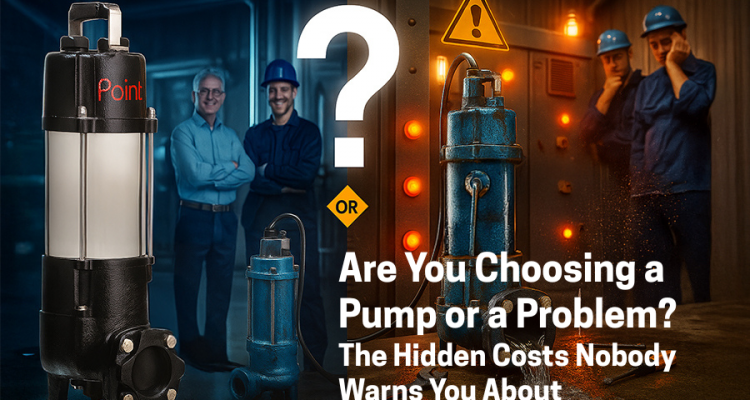
Are You Choosing a Pump or a Problem? The Hidden Costs Nobody Warns You About

At first glance, a pump looks simple—just a motor, a casing, and a few spinning parts. But here’s the truth every engineer eventually learns the hard way: a cheap pump is never cheap for long.

The real cost of a pump isn’t in the invoice—it’s in what happens after installation. The hidden energy drain, the maintenance hours, the downtime that creeps up silently. And if you’re not careful, you’re not buying a pump—you’re buying a problem.

The Illusion of the Low Price Tag

Every business loves saving money upfront. But when it comes to industrial equipment, that logic can backfire—spectacularly.
In 2024, the Bureau of Energy Efficiency (BEE) reported that inefficient pumps waste up to 20–30% more power compared to energy-rated models. That extra energy? It’s coming straight out of your profit margin.

So, when a pump vendor offers a “low-cost deal,” remember: the purchase price is just 10–15% of the total lifecycle cost. The rest—maintenance, energy, downtime, and repairs—make up the other 85–90%.

That’s why brands like Point Pumps focus not on the cheapest build, but on the most cost-effective performance over time.

The Hidden Costs Nobody Mentions

Let’s break down where the money really goes when you choose the wrong pump.

  1. Energy Consumption:
    An oversized or underperforming pump draws excessive current. Studies show an average 25% energy loss from improperly sized pumps in manufacturing lines. That can translate to ₹6–10 lakhs annually for a medium-sized plant.
  2. Downtime & Production Loss:
    Every minute your system is down costs more than you think. One failed pump can halt an entire production line or sewage system. Even two hours of downtime in a textile unit can mean a ₹1.2 lakh loss in output.
  3. Maintenance Burn:
    Cheaper pumps often use low-grade impellers, poor seals, or mismatched bearings. They fail faster, leak more, and demand replacement parts that add up.

4. Reputation Cost:
When a breakdown hits, clients don’t care that it was “the pump’s fault.” Your delivery deadlines slip, and your reputation takes the hit.

What Smart Buyers Look For

The smartest engineers and plant heads don’t shop for the lowest quote—they shop for predictable performance.

Here’s what they consider:

  • Efficiency rating (check for ISI or BEE certification)

  • Duty cycle compatibility—whether the pump can run continuously without overheating

  • Material composition—for example, Point Pumps’ cast iron and stainless-steel builds prevent rust and corrosion even in heavy-duty operations

  • After-sales support—a warranty is useless without service reliability

In short: they buy trust, not just torque.

The Power of Precision Engineering

Here’s what changes when you go with the right pump:

  • Longer life: Point Pumps’ hydraulically balanced impellers reduce mechanical stress, extending lifespan by up to 40%.

  • Energy savings: High-efficiency motors minimize energy draw, helping factories cut operational costs by 15–25% annually.

  • Less noise and vibration: Better design equals smoother performance and fewer system shocks.

  • Consistent flow rate: Even under variable pressure, quality pumps maintain steady performance—critical for process consistency.

These small engineering decisions add up to big operational peace of mind.

A Costly Mistake in Disguise

A real-world example: A medium-scale chemical plant in Tamil Nadu chose a low-cost import for their wastewater system. Within nine months, seal failures caused repeated leakages. By the time they replaced it, they’d spent more on repairs and energy than the cost of two Point Pumps.

When they finally switched, they cut their maintenance frequency by 60%—and their power bills dropped too. Sometimes the cheapest quote is just the most expensive decision in disguise.

The Point Pumps Perspective

Point Pumps has spent decades refining the science of durability, efficiency, and trust. Their engineers design with a simple philosophy: a pump shouldn’t just move water—it should move industries forward.

From agriculture to municipal sewage systems, from industrial dewatering to booster applications, every Point product is built to handle the realities of Indian conditions—voltage drops, impure water, and nonstop workloads.

When you invest in a Point Pump, you’re investing in:

  • Energy efficiency that protects your margins


  • Reliable uptime that protects your productivity


  • Quality service support that protects your peace of mind


Because the best pump isn’t just one that runs—it’s one you never have to think about.

Final Thought

Before signing that next purchase order, ask yourself: Am I choosing a pump—or a future headache?

Every component, every watt, every rotation matters. The smart choice isn’t the cheapest—it’s the one that keeps your system running day after day, year after year.

In the long run, Point Pumps doesn’t just save energy. It saves you from the hidden costs nobody warns you about.

Post Comment