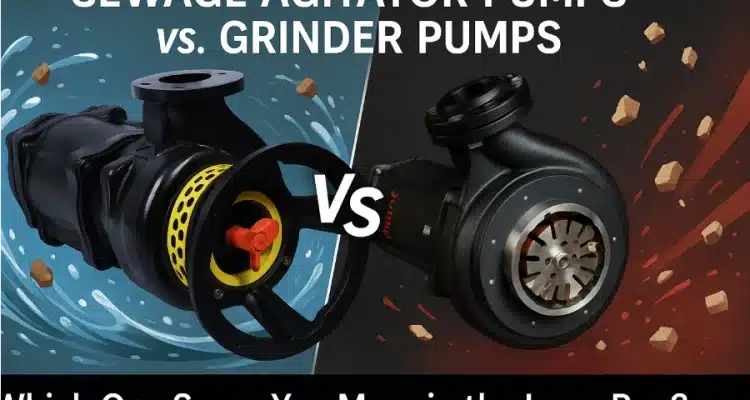
Sewage Agitator Pumps vs. Grinder Pumps—Which One Saves You More in the Long Run?
Let’s be honest, nobody wakes up excited to talk about sewage pumps. Yet here you are, curious about whether an agitator pump or a grinder pump will be kinder to your budget over time. And trust me, this is the kind of “unsexy” facility decision that can make or break your maintenance budget. So, pull up a chair, because by the end of this, you’ll know which pump type is your true cost-saving partner.
First, Let’s Clear the Water
Before we start comparing, let’s quickly define the two contenders.
Sewage agitator pumps are designed to stir up solids in the sewage pit or wet well, keeping materials suspended so they can be pumped out more easily. They’re ideal when solids need to stay in motion to prevent blockages or sediment buildup.
Grinder pumps take solids in wastewater and grind them down into a slurry, making it easier for the liquid to travel through smaller pipes. They’re the problem solvers when you need to push waste over long distances or against gravity.
On paper, both sound like heroes, but in real-world facility management, one may suit your needs better than the other.
Installation Costs: The First Punch to the Wallet
Grinder pumps tend to be pricier upfront. This is because they have more complex internal components and often require a more tailored installation. They’re like the luxury cars of the pump world, smooth, efficient, but not cheap to get on the road.
Sewage agitator pumps generally come with a lower purchase price and simpler installation, making them attractive for facilities with tighter initial budgets. If your wastewater setup doesn’t involve long pumping distances or uphill transport, you might save a decent chunk here.
Maintenance and Repair: Who Demands More Attention?
Here’s where grinder pumps can start tipping the financial scales. Their grinding mechanism works hard, which means more moving parts that can wear down. If something jams or breaks, you’ll need a repair specialist, and that visit won’t be free.
Sewage agitator pumps, with their simpler design, typically require less maintenance and have fewer parts to fail. Of course, they still need regular check-ups, but the risk of expensive emergency repairs is often lower.
Energy Consumption: The Quiet Cost
Grinder pumps generally require more power because of the grinding process. Over time, this can noticeably impact your energy bills, especially in high-use environments like apartment complexes or large commercial buildings.
Sewage agitator pumps use less energy per operation since they focus on mixing rather than grinding. If your facility has constant pump cycles, this lower energy draw can add up to significant long-term savings.
Performance in Real-World Conditions
This is where your actual needs matter most.
If your sewage system deals with heavy solids that need to travel far, a grinder pump can prevent clogs and backups that might cost far more to fix than the pump itself. In these cases, the higher operating cost may be worth the peace of mind.
However, if your facility’s sewage is mostly liquid with occasional solids, and your discharge pipes are short and fairly level, a sewage agitator pump can keep things moving smoothly without the extra complexity.
Case in Point: A Mid-Size Industrial Plant
A manufacturing facility in South India was spending heavily on grinder pump maintenance. Their system had short discharge runs and minimal solids in the waste stream. After consulting with sewage pump experts, they switched to sewage agitator pumps.
The result? A 22% drop in annual energy costs and a 40% reduction in maintenance expenses. While the initial swap required investment, the payback period was less than two years.
Long-Term Value: Doing the Math
Choosing the right pump is like choosing the right pair of shoes. The cheapest pair may save money today but could cost you more in discomfort or replacements. Likewise, the most expensive pair isn’t worth it if you never use half the features.
When calculating long-term value, consider:
Upfront cost
Maintenance frequency and cost
Energy usage over time
Risk of system downtime
Suitability for your specific waste profile
Often, sewage agitator pumps win for low-complexity systems because they keep running costs manageable. Grinder pumps, however, can be the most cost-effective choice when the application truly demands their power.
The Verdict
There’s no universal winner here. If your sewage system deals with high solids, long distances, or elevation changes, a grinder pump is worth the extra investment. If your system is straightforward with minimal solids and short discharge runs, sewage agitator pumps can deliver reliable performance with less strain on your maintenance budget.
Final Takeaway
Think of it like this: grinder pumps are the high-intensity athletes of the pump world, built for endurance in tough conditions but needing more care. Sewage agitator pumps are the steady marathon walkers, low on drama and big on consistency. The key to saving more in the long run is knowing which one matches your facility’s pace.
Choose wisely, keep it maintained, and your pump will repay you with years of quiet, trouble-free service. And if anyone ever asks why you care so much about sewage pumps, you can just smile and say, “Because I like my money where I can see it, not going down the drain.